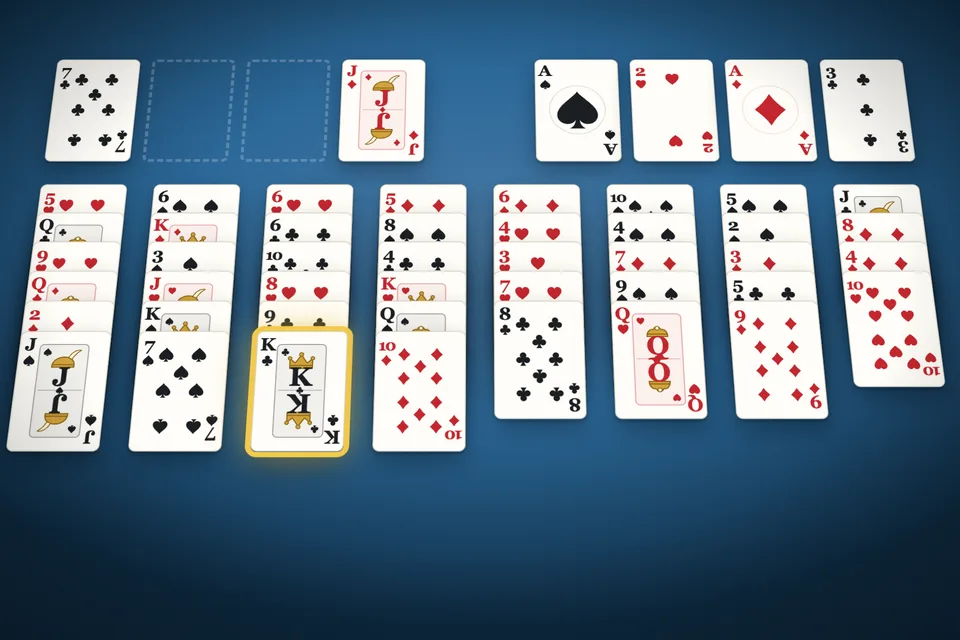
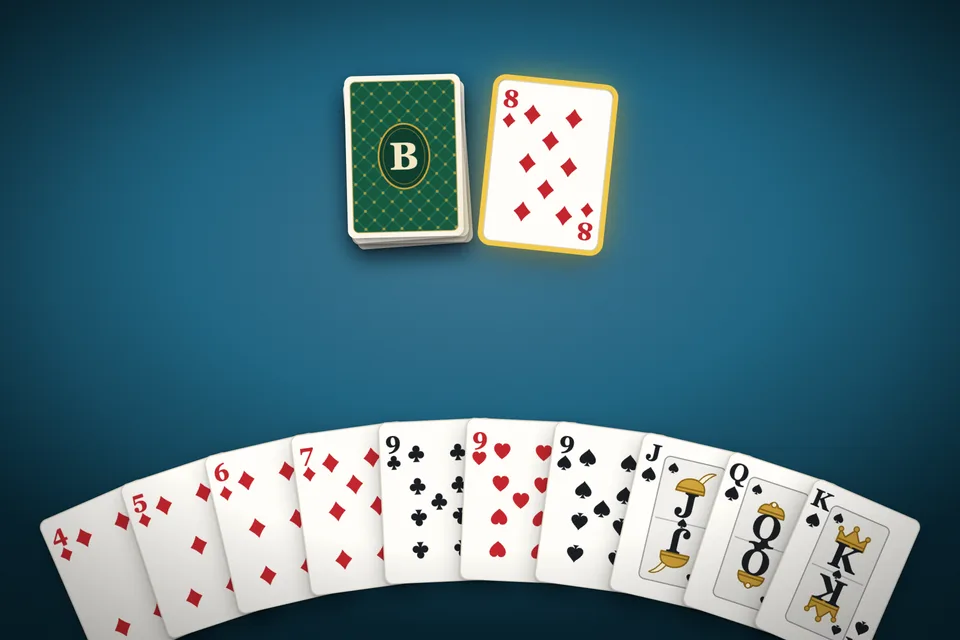
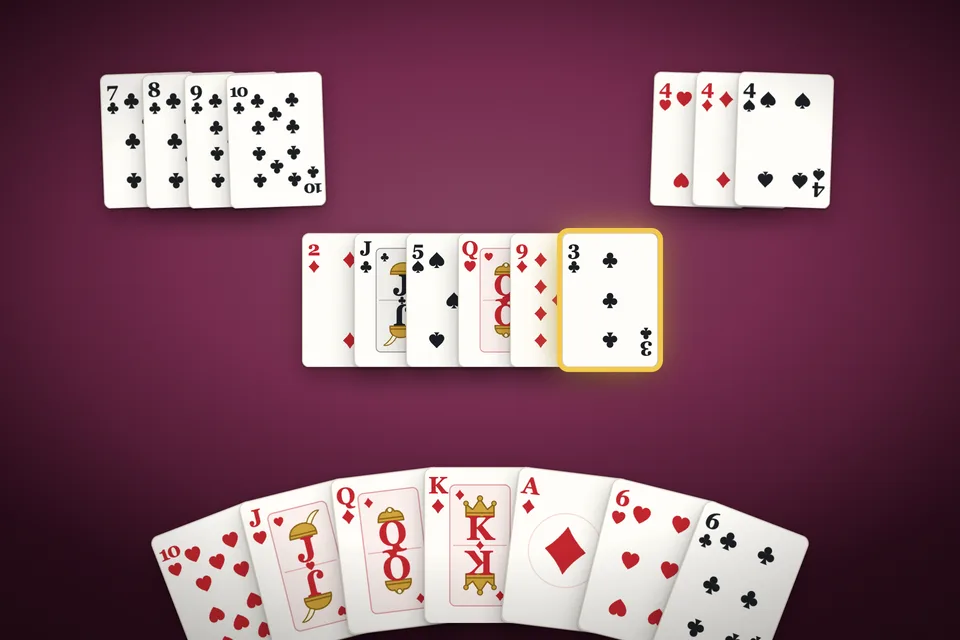
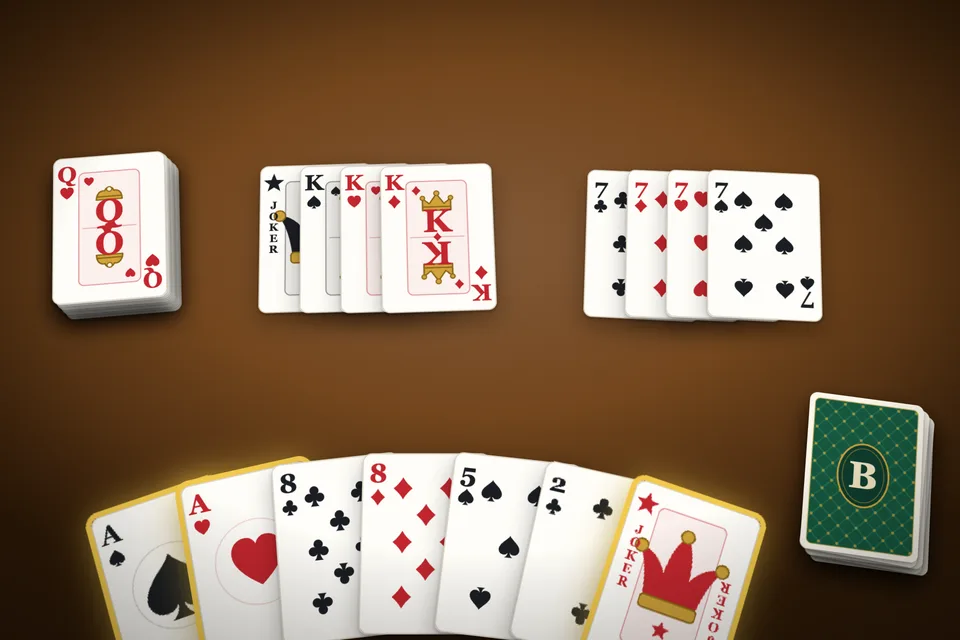
Play free Spades online — the classic partnership card game — with June as your computer partner against Rose and Hank. Bid your tricks, dodge the bags, dare to go Nil and race your team to 500 — no download and no sign-up.
How to play Spades
Here's everything you need to start your first hand. When you want every rule in detail, with worked examples and the common house rules, read our complete Spades rules guide.
Spades is the classic American partnership card game: four players, two teams, and one suit that always beats the rest. It grew popular in the 1930s and 40s, traveled the world with American soldiers, and is still a fixture of college dorms, family tables and break rooms. Here you play Spades online with a computer partner, June, who sits across from you. Rose and Hank, on your left and right, are the other team.
The deal
Spades uses a standard 52-card deck with no jokers. The dealer hands out every card, one at a time, so each player holds 13. Aces are high, and the deal moves one seat to the left after every hand.
The goal
Every hand has 13 tricks. Before any card is played, each player bids how many tricks they think they will win. You and your partner add your bids together into a team contract, and your job is to take at least that many tricks between you. The first team to reach the target score — 500 points unless you change it in Settings — wins the game.
Playing a trick
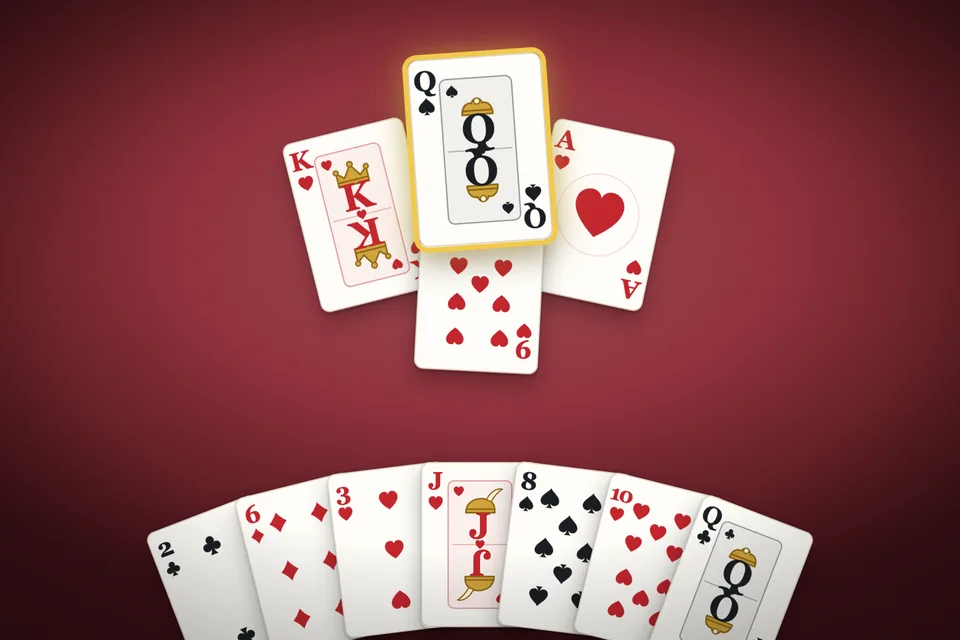
The player to the dealer's left leads the first trick. Everyone else plays one card in turn, going clockwise. You must follow suit — play a card of the suit that was led — whenever you can. If you can't, you may play any card, including a spade.
The highest spade in the trick wins it. If no spade was played, the highest card of the suit that was led wins. The winner of each trick leads the next one.
Breaking spades
Spades are always trump, so they are protected at the start of each hand: nobody may lead a spade until spades have been broken — that is, until someone has played a spade on a trick because they couldn't follow suit. The one exception: if you hold nothing but spades, you may lead one.
Bidding in Spades
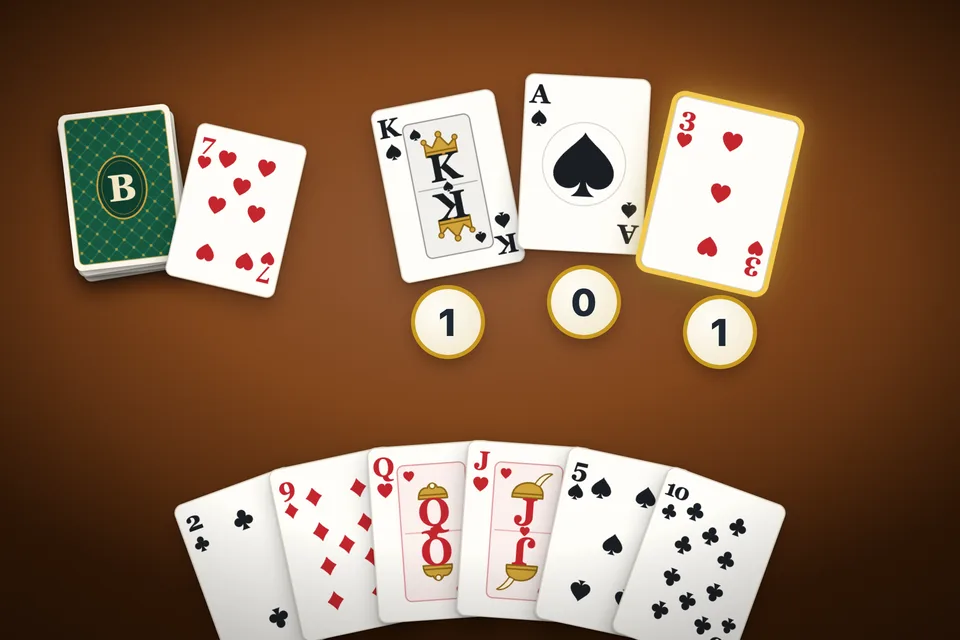
Starting with the player to the dealer's left and ending with the dealer, each player makes one bid from 1 to 13, or bids Nil. There is no second round and no overbidding — everyone simply says how many tricks they expect to take. In BieGames you choose your number from the bidding panel in the middle of the table, and the highlighted number is a suggestion from the computer.
Your team's contract is your bid plus your partner's. If you bid 4 and June bids 3, your team needs 7 tricks — it doesn't matter which of you takes them.
How to count your tricks
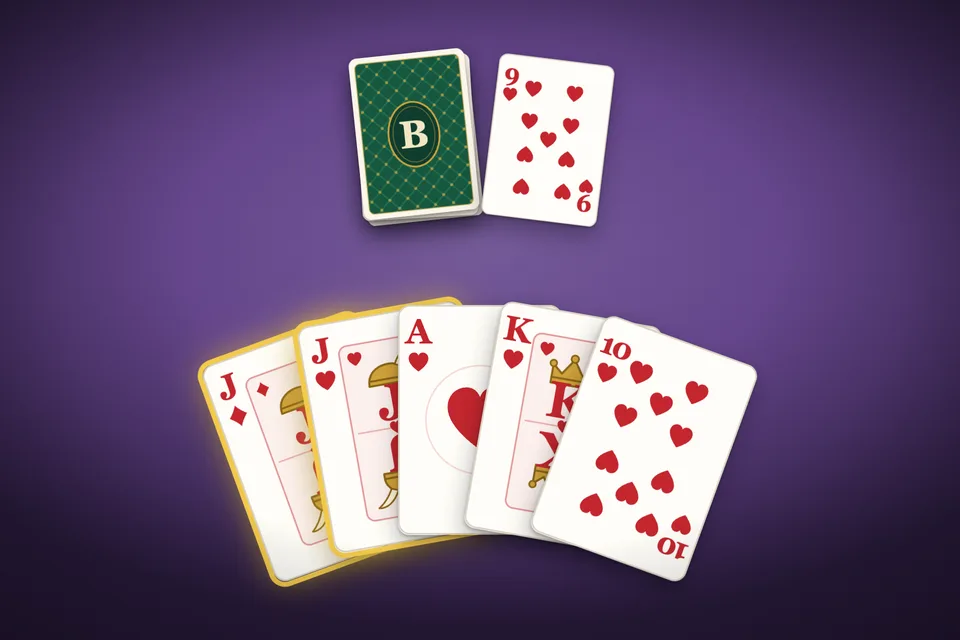
- High spades are the surest tricks. The Ace of spades always wins; the King usually does if you hold at least one other spade.
- Long spades win tricks late in the hand. With five or more spades, count roughly one trick for every spade beyond the third.
- Side Aces are good for about one trick each. Kings are worth less, especially if the suit is short and the Ace is still out.
- Voids and singletons let you trump in early. An empty suit plus a few spades to spare is often worth an extra trick.
Most experienced players round down when in doubt: missing your bid costs far more than taking an extra trick.
Nil and Blind Nil
Bidding Nil means you promise to take no tricks at all. If you succeed, your team scores 100 points on top of whatever your partner makes. If you take even one trick, your team loses 100. Your partner's bid stands on its own: the tricks you take don't count toward it, but they do count as bags.
A good Nil hand has low cards, no high spades (never the Ace), no more than three spades, and enough small cards in each suit to slip under the opponents. Your partner's job is to protect you by winning the tricks you might otherwise be stuck with — and the opponents will do their best to force you to take one.
Blind Nil is the daring version: you bid Nil before looking at your cards, for 200 points if it holds and minus 200 if it fails. Many players allow it only for a team that is far behind. By default BieGames offers Blind Nil when your team trails by 100 points or more — your cards stay face down until you choose to look. You can turn it off, or allow it at any time, in Settings.
Spades scoring and bags
After the 13th trick, each team is scored on its contract:
| Result | Points |
|---|---|
| Make your contract | 10 points for every trick bid |
| Each extra trick (a bag) | +1 point |
| Miss your contract (you are set) | −10 points for every trick bid |
| Nil made / failed | +100 / −100 |
| Blind Nil made / failed | +200 / −200 |
| Every 10 bags | −100 points |
For example, if your team bids 7 and takes 9 tricks, you score 72 points: 70 for the contract and 2 for the bags. If you take only 6, you lose 70.
Why bags matter
Bags look harmless at one point each, but they add up. Your team's bag count carries from hand to hand, and as soon as it reaches 10 you lose 100 points and the count starts over. This sandbagging rule keeps everyone honest: underbidding every hand is a slow way to lose. You can switch the bag penalty off in Settings for a more relaxed game.
Winning the game
The first team to reach the target — 250, 300 or 500 points, your choice — wins. A team that sinks to −200 loses on the spot. If both teams pass the target on the same hand, the higher score wins; if they are exactly tied, another hand is played to settle it.
Spades strategy tips
- Make the contract first. Until your team has its tricks, take every safe trick you can. Once you have them, start ducking to avoid bags — unless you can still set the opponents.
- Second hand low, third hand high. When an opponent leads, play low and let your partner have a go. When your partner leads low, play your best card to force out the opponents' high ones.
- Don't trump your partner's winner. If June's card is already winning the trick, throw away a low card and keep your spades for later.
- Count the spades. There are 13 of them. Keep track of how many have fallen and who has run out of each suit — it tells you when your King of spades or long side suit has become a sure winner.
- Create a void. Leading your singleton early means you can trump that suit the next time it's led.
- Cover your Nil partner. When June bids Nil, lead your high cards, play over her cards when she's winning a trick, and save your lowest cards for later.
- Attack an opponent's Nil. Lead low cards in suits the Nil bidder still holds, and don't rescue them by overtaking their card — breaking a Nil is a 100-point swing.
- Mind the scoreboard. Near 10 bags, bid a little higher and duck harder. Far behind late in the game, a bold Nil or a set attempt may be your best chance.
- Use the Hint button while you learn. It suggests a bid and highlights the card the Hard computer would play, without playing it for you.
Spades variations
Spades is played with plenty of house rules. BieGames sticks to the most common partnership game and lets you adjust the parts players disagree about most:
- Game length — play to 250, 300 or 500 points.
- Nil — turn Nil bids off for a straight game of contracts.
- Blind Nil — off, only when your team is 100 or more behind, or any time.
- Bag penalty — on (−100 for every 10 bags) or off.
Other versions you may meet include Cutthroat Spades for three players with no partners, a two-player game where you build your hand by drawing, games where jokers or the deuces of spades become the highest trumps, a 10-trick bonus for bidding ten or more, and Blind Nil hands where partners swap two cards. BieGames keeps things simple: no jokers, no card passing, and Aces are always high.
You can also choose how strong the computer players are. On Easy, Rose and Hank count their high cards and play carelessly, while June still plays a solid game. Normal plays sound partnership Spades. Hard tracks every card, figures out who is out of which suit, and plays each hand out many times in its head before choosing a card.
Enjoy trick-taking but want every player for themselves? Hearts uses the same deck and the same tricks with no bidding and no partners, and our guide to Spades vs Hearts explains how differently the two play.
Want every detail, with examples and the common house rules? Read our complete Spades rules guide.
Spades FAQ
Can I play Spades online for free?
Yes. BieGames Spades is completely free to play in your web browser on a phone, tablet or computer. There is nothing to download and no account to create, and your game is saved automatically so you can finish it later.
What are bags in Spades?
Bags, also called sandbags or overtricks, are the tricks your team takes beyond its contract. Each bag scores 1 point, but your bags carry over from hand to hand, and every time your team collects 10 of them you lose 100 points.
What does "spades are broken" mean?
Nobody may lead a spade until a spade has been played on a trick by someone who could not follow suit. Once that happens, spades are broken and can be led like any other suit. A player holding only spades may lead one at any time.
How does a Nil bid work?
A Nil bid means you will take no tricks. If you manage it, your team scores 100 points; if you take even one trick, your team loses 100. Your partner still plays for their own bid, and the tricks you take do not count toward it.
What is Blind Nil?
Blind Nil is a Nil bid made before you look at your cards. It is worth 200 points if you take no tricks and costs 200 if you take any. In BieGames it is offered by default only when your team is 100 or more points behind.
What happens if a team is set?
A team is set when it takes fewer tricks than it bid. It loses 10 points for every trick in its contract — a missed bid of 6 costs 60 points — and its bags for that hand do not count.
How many points do you need to win at Spades?
The standard game is played to 500 points, and BieGames also offers shorter games to 250 or 300. A team that falls to −200 loses right away. If both teams pass the target on the same hand, the higher score wins.
Who leads first in Spades?
The player to the dealer's left leads the first trick, and may lead any suit except spades. After that, whoever wins a trick leads the next one.
Is Spades the same as Bridge?
No. Both are partnership trick-taking games with bidding, but Spades is much simpler. Spades are always trump, every player makes a single bid of how many tricks they will take, and there is no dummy hand or auction. Many people play Spades as a friendlier way into trick-taking games.
What is the lowest bid in Spades?
The lowest number you can bid is 1 trick — or you can bid Nil, a promise to take no tricks at all. Some house rules also require a team to bid at least 4 tricks between them.
Can you play a spade on the first trick?
Yes, if you cannot follow the suit that was led. What you cannot do is lead a spade until spades have been broken, unless your hand holds nothing but spades.
Can you play Spades with 2 or 3 players?
Yes. Three people can play Cutthroat Spades, each bidding and scoring alone, and two-player versions build hands by drawing from the deck — see how to play Spades with 2 players. BieGames plays the classic four-player partnership game, with computer players filling the other three seats.
What happens if you renege in Spades?
To renege is to fail to follow suit when you could have. At a real table, house rules decide the penalty: a common one costs the offending team three tricks, and some tables simply count their bid as set. On BieGames you can't renege — when you hold a card of the suit that was led, only those cards can be played.
What happens when you get 10 bags in Spades?
As soon as your team’s bag count reaches 10, you lose 100 points and the count drops back by 10. Bags beyond ten carry over, so if a hand takes you from 8 bags to 12, you lose 100 and start the next hand with 2. You can turn the bag penalty off in Settings.
What happens if a game of Spades ends in a tie?
If both teams pass the target on the same hand, the higher score wins. If the two scores are exactly tied, another hand is played to settle it, and BieGames keeps dealing until one team is ahead.
What is a Boston in Spades?
A Boston is when one team takes all 13 tricks in a hand. Under some house rules, a team that bids 13 and makes it wins the game on the spot. BieGames scores it like any other contract — 10 points for every trick bid plus 1 for each bag — so a made bid of 13 is worth 130.