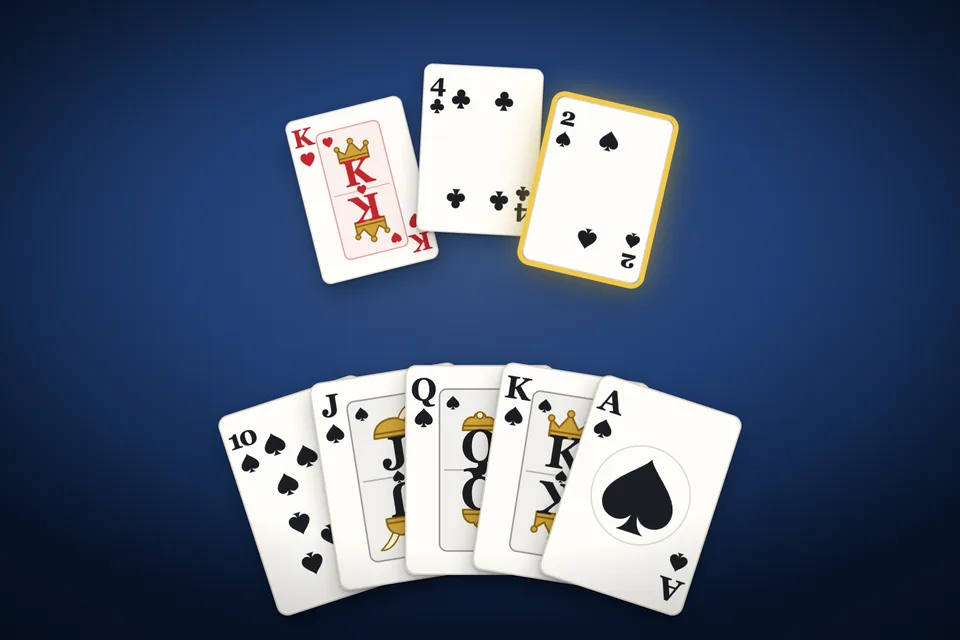
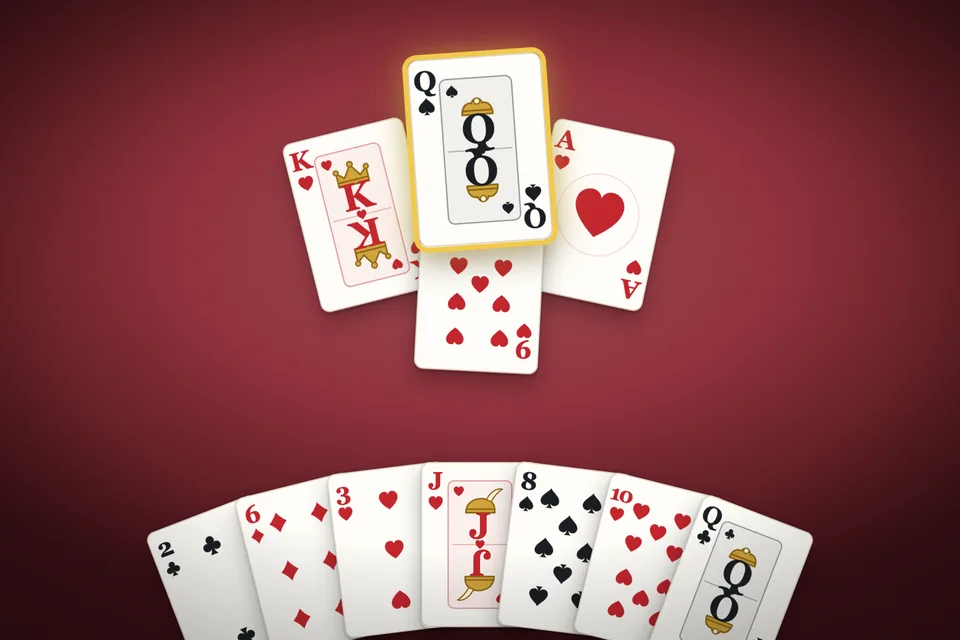
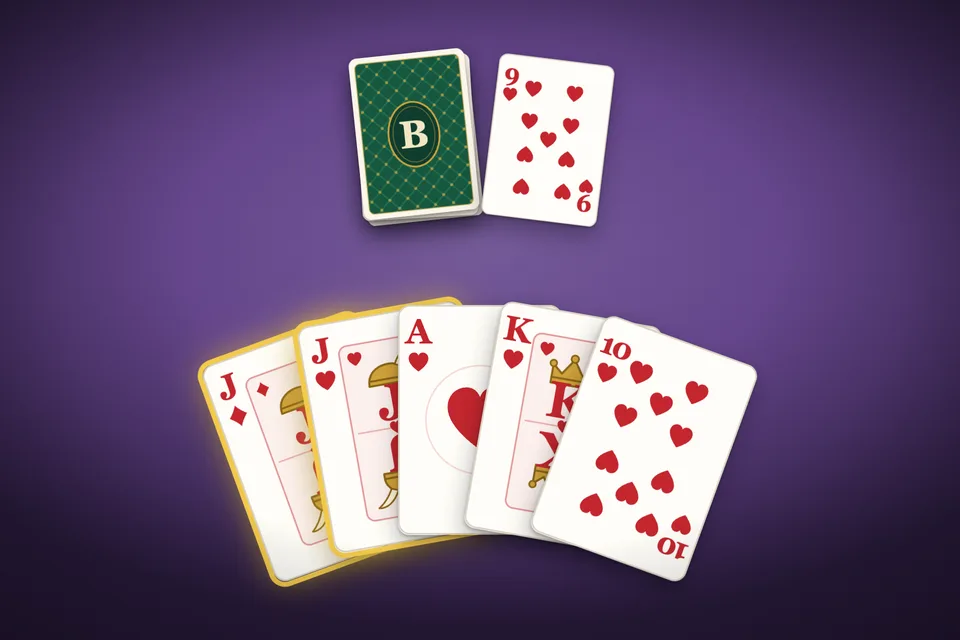
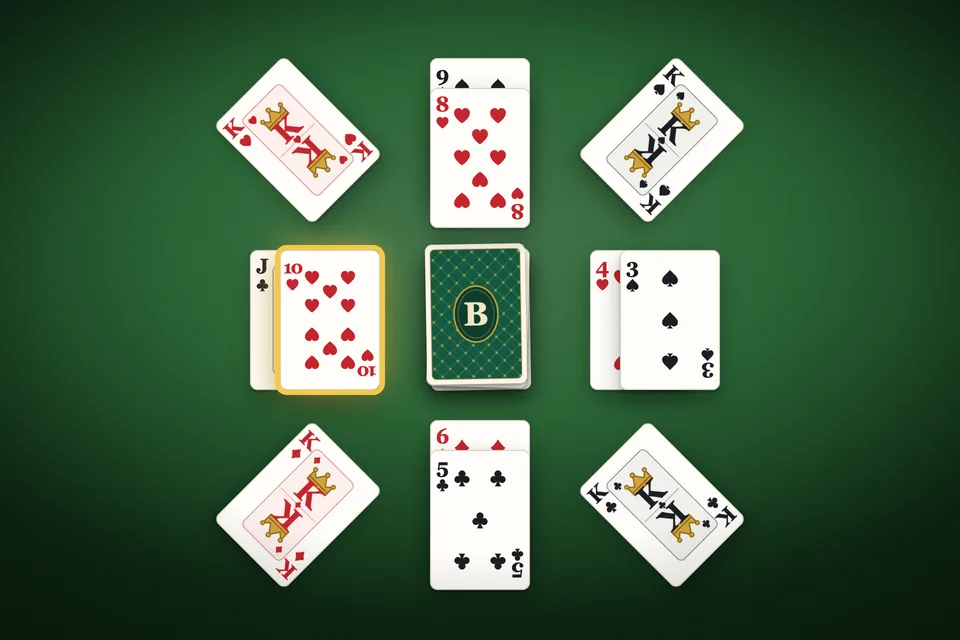
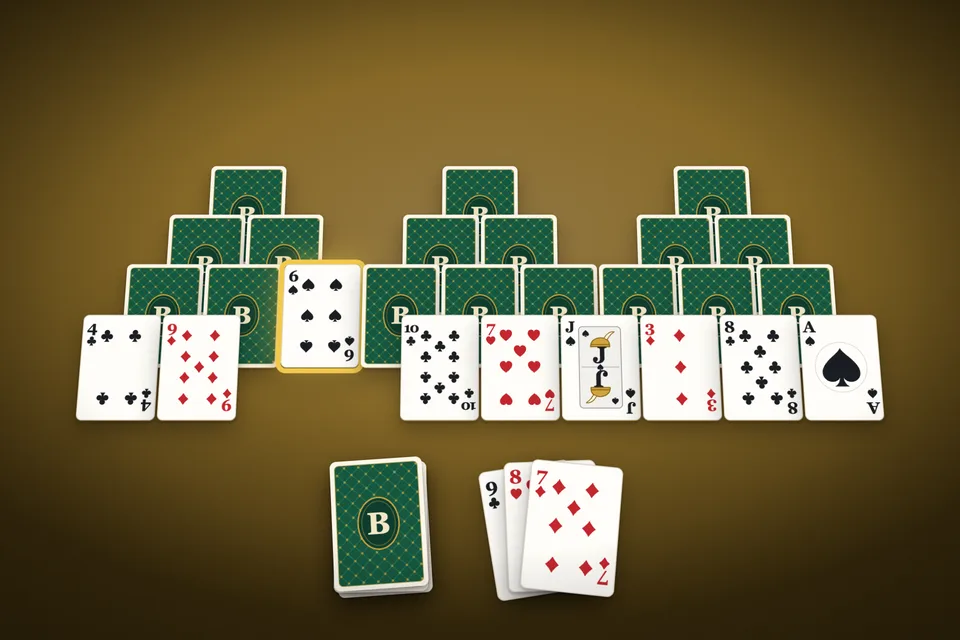
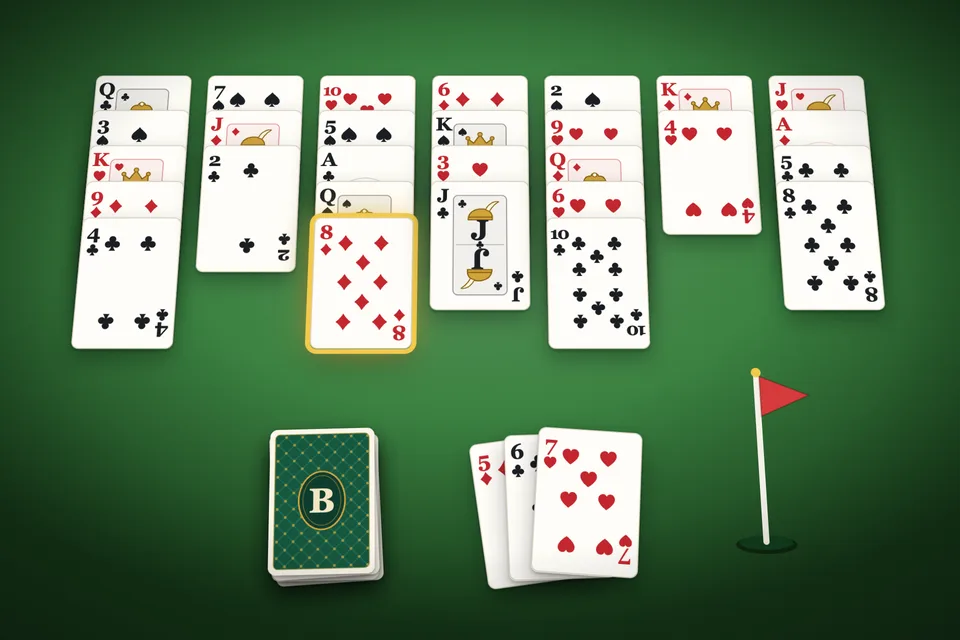
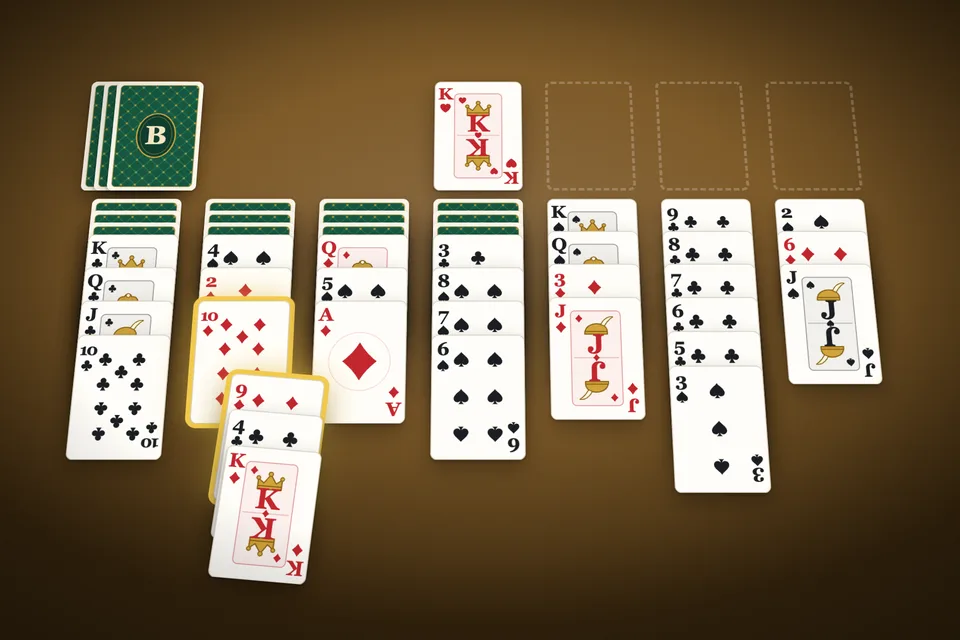
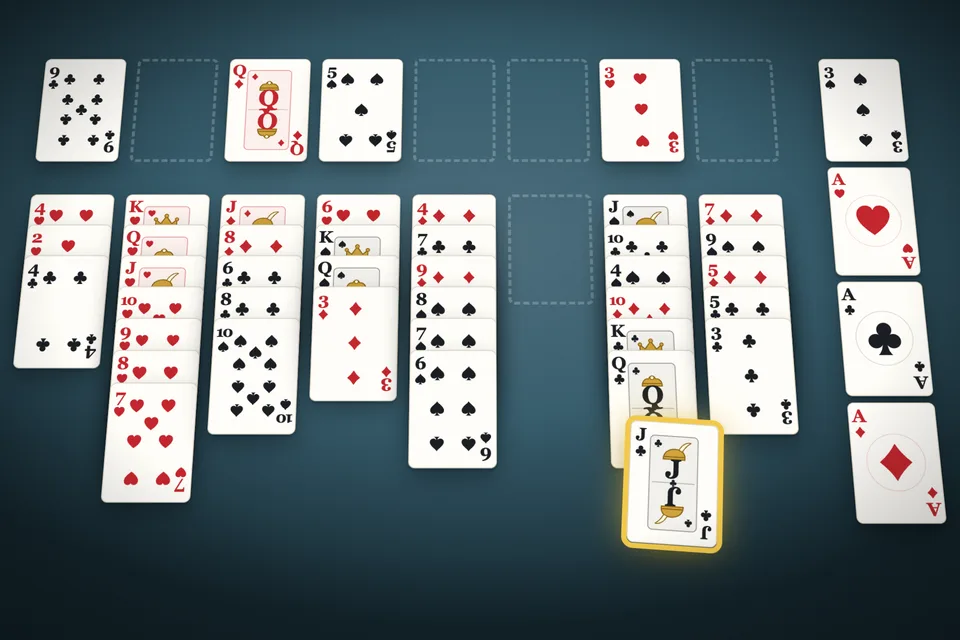
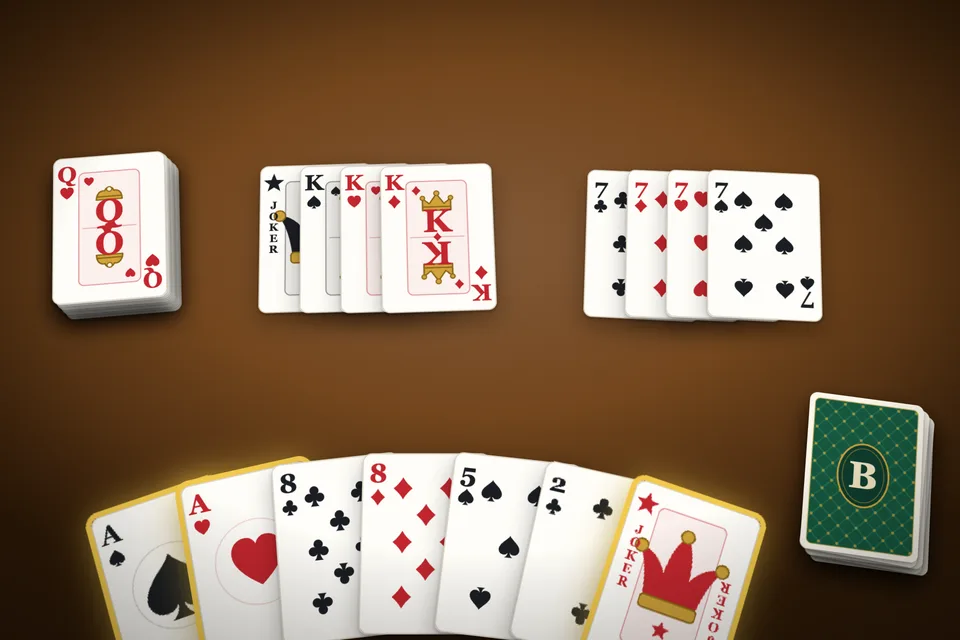
Play Oh Hell online free against friendly computer players. Bid exactly how many tricks you will take, then try to hit that number on the nose as the hands grow from one card to ten and back down again. Choose 3, 4 or 5 players and an easy, normal or hard table.
How to play Oh Hell
Oh Hell is a trick-taking card game with a twist: it isn't about taking the most tricks, it's about taking exactly the number you said you would. Everyone plays for themselves, the number of cards changes every hand, and one trick too many hurts as much as one too few. It is also known as Oh Heck, Oh Pshaw, Up and Down the River, Blackout and, in Britain, Contract Whist or Nomination Whist.
BieGames follows the rules on pagat.com, with the common choices below; Settings switches to the other popular ways of playing.
Players and cards
Oh Hell is played by 3 to 7 people with a standard 52-card deck. Here you play with 2, 3 or 4 computer players (4 players in all is the default). Aces are high: A, K, Q, J, 10 down to 2 in each suit.
The deal and the trump card
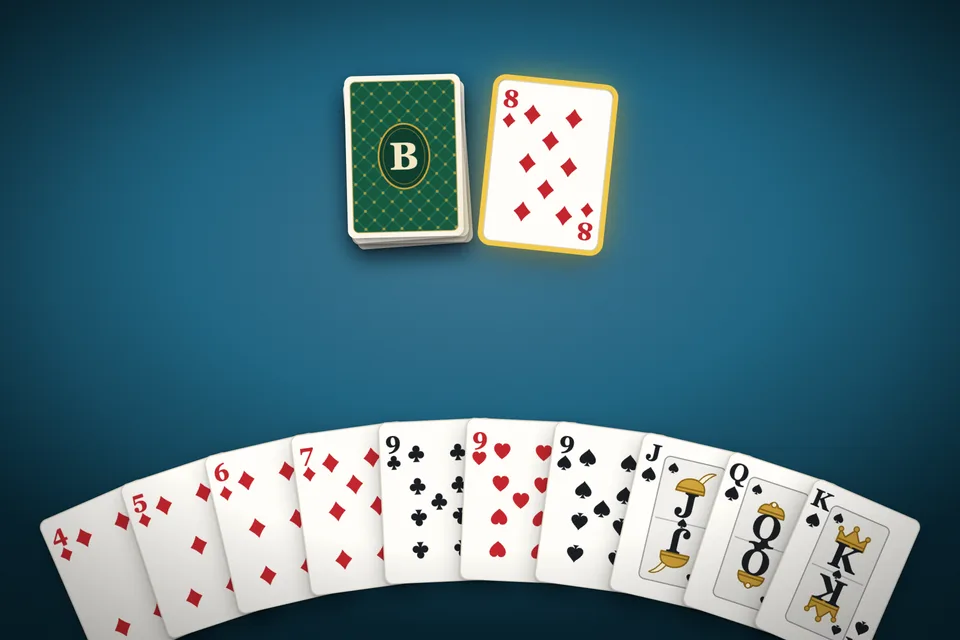
The first hand has one card each, the next two, and so on up to ten, then back down to one: 19 hands in all. The deal passes to the left after every hand. After dealing, the dealer turns up the next card of the deck. Its suit is trump for that hand — every trump beats every card of the other suits. The rest of the deck isn't used. If every card has been dealt and none is left to turn up, the hand is played with no trump; with 10 cards at most, that never happens here.
Bidding
Starting with the player on the dealer's left and going around the table, everyone bids once: the exact number of tricks they expect to take. Zero is a perfectly good bid. The dealer bids last, and here comes the rule that gives the game its bite — the hook: the dealer may not bid the number that would make all the bids add up to the number of tricks in the hand. In a five-card hand where the others have bid 1, 2 and 0, the dealer can bid anything except 2. That way at least one player is bound to miss. On your turn the bidding panel shows the bids so far, and the number you can't bid is crossed out.
Playing the tricks
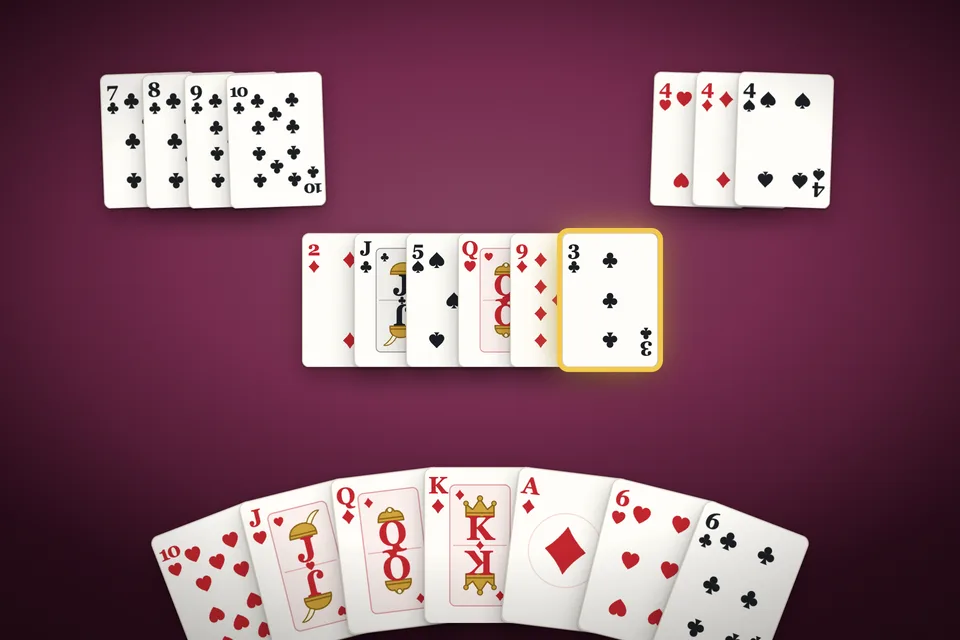
The player on the dealer's left leads the first trick with any card. Everyone else must follow suit if they can. If you can't, you may play any card: a trump to try to win the trick, or a card from another suit to throw it away. The highest trump played wins the trick; if no trump was played, the highest card of the suit led wins. The winner leads to the next trick, and play goes on until every card in the hand has been played.
Tap a card or drag it to the table to play it. Cards you can play are outlined in gold, so you can never break the follow-suit rule by mistake. Each player's name tag shows their bid and the tricks they've won, and it turns green when that player is on bid — exactly where they want to be.
Oh Hell scoring
Scoring is simple: if you take exactly the number of tricks you bid, you score 10 points plus your bid. If you take more or fewer, you score nothing for the hand. This is the scoring Bicycle gives for Oh Pshaw and the simplest system pagat.com lists. Scores add up over all 19 hands, and the highest total at the end wins.
| Bid | Tricks taken | Points |
|---|---|---|
| 0 | 0 | 10 |
| 2 | 2 | 12 |
| 5 | 5 | 15 |
| 2 | 3 | 0 |
| 3 | 1 | 0 |
Because the 10-point bonus is most of every score, a zero you make is worth nearly as much as a bold three. Accurate bidding wins more games than big hands do.
The other common scoring
Many families score 1 point for every trick you take, plus a 10-point bonus when you hit your bid exactly. A player who bid 2 and took 3 scores 3 instead of nothing. This is the usual scoring in Contract Whist, and you can switch to it in Settings. Making your bid is still what matters most.
Keeping score
Press Scores at any time for the score sheet: every hand so far, with each player's points, bid and tricks, and the running totals.
Oh Hell strategy tips
Bidding
- Count sure winners first. The Ace of trump always wins a trick, and the King of trump usually does. Off-suit Aces are good but can be trumped, especially in big hands where players run out of suits.
- Think about how many cards are out. In a three-card hand with four players, only 12 of the 52 cards are dealt, so the Ace above your King is probably sitting in the unused deck. In a ten-card hand it's much more likely to be out against you.
- Low cards are a gift when you bid low. A hand full of 2s, 3s and 4s is easy to bid zero on. A hand of middle cards — 8s, 9s, 10s — is the hardest to judge, because those cards win or lose depending on what others play.
- Listen to the bids. If the bids add up to more than the tricks, players will be fighting for tricks they can't all get. If they add up to fewer, everyone will be ducking, and extra tricks may land on you.
- As the dealer, use your information. You bid last and know every other bid. When the hook takes away your natural bid, lean toward the side that is easier to steer — usually one fewer, since it's easier to lose a trick than to win one.
Playing the hand
- Get rid of danger early. When you've made your bid, throw your high cards on tricks someone else is already winning. A King you still hold at the end of the hand is a trick you didn't want.
- Play the highest card that still loses. If someone has led the Queen and you want to lose, play your Jack, not your 2. Save low cards for leading later, when a low lead is the safest way to give a trick away.
- Win cheaply when you need tricks. If you're last to play and need a trick, take it with the smallest card that wins. Don't spend your Ace when a 9 will do.
- Watch the name tags. A player who is on bid will try to lose every trick from now on. Leading a suit they must win can knock them off their bid — and stopping the leader is often worth as much as scoring yourself.
Oh Heck, Up and Down the River and Contract Whist
Oh Hell goes by many names, and the rules shift a little from one to the next. Here is how the common ones line up.
- Oh Hell, Oh Heck and Oh Pshaw are the American names. Oh Heck and Oh Pshaw are the polite versions. Bicycle's rules for Oh Pshaw deal one card in the first hand and one more each hand up to the most possible (13 hands with four players), and they have no hook: the scorekeeper just announces whether the bids are over or under the tricks.
- Up and Down the River is the name used in Australia and New Zealand, and it describes the deal: the hand sizes go down to one card and back up (or up and back down).
- Blackout and Blob are names for the game, and for its simplest scoring, where only an exact bid scores.
- Contract Whist and Nomination Whist are the British names. They usually start with seven cards each, go down to one and back up to seven (13 hands), keep the dealer's hook, and score one point a trick plus ten for an exact bid. The name Nomination Whist is also used for a couple of different whist games, so it's worth checking which one your group means.
You can play most of these versions here. In Settings, choose the biggest hand (5, 7 or 10 cards), the order of the hands (up and down, down and up, or down only), turn the hook on or off, and pick either scoring method. For Contract Whist, choose 7 cards, "Down and up" and "1 a trick + 10 if exact".
Whatever you call it, the game goes back to the 1930s, when it appeared in both London and New York.
Computer players, settings and daily deal
- Easy — the computer players bid by counting their Aces and high trumps, and play loosely, so they miss their bids often.
- Normal — they size up each hand by playing it out many ways, then play to hit their bid exactly: winning cheaply when they need tricks, ducking and throwing off high cards once they have enough.
- Hard — they weigh every bid and every card by playing the rest of the hand out hundreds of times, with the cards they can't see dealt in many different ways that fit what they know, and they'll knock you off your bid when it costs them nothing. They never peek at your hand or the deck.
Change the level, the number of players and the rules in Settings; they take effect with the next game, and your stats are kept for each level. Press Daily to play the day's deal — the same cards for everyone today, with four players and the standard rules above, whatever your settings.Hint suggests a bid or a card, worked out from your own hand and what has been played. You can undo your last bid or card until the next computer player acts. Your game saves itself, so you can close the page and come back later.
On a keyboard, type a number to bid (1 then 0 for ten), and press 1–9 (0 for the tenth card) to play a card from your hand, left to right. H gives a hint, S opens the score sheet and Ctrl+Z (⌘Z on a Mac) takes back a move.
Want every detail, with examples and the common house rules? Read our complete Oh Hell rules guide.
Oh Hell FAQ
How do you play the Oh Hell card game?
Each hand, everyone is dealt the same number of cards and the next card is turned up to set trump. Starting left of the dealer, each player bids exactly how many tricks they will take. Then you play the tricks: follow suit if you can, the highest trump or the highest card of the suit led wins, and the winner leads next. Taking exactly your bid scores 10 plus your bid; anything else scores nothing.
What is the hook rule in Oh Hell?
The dealer bids last and may not bid the number that would make the total of all bids equal the number of tricks in the hand. Some players call it “screw the dealer.” It guarantees that at least one player misses. You can turn it off in Settings, as Bicycle’s Oh Pshaw rules do.
Can you bid zero in Oh Hell?
Yes. A bid of zero means you plan to take no tricks at all, and making it scores 10 points — almost as much as any other bid. Zero is often the smartest bid with a hand of low cards, especially in the small hands at the start and end of the game.
How do you score Oh Hell?
The simplest and most common way: an exact bid scores 10 points plus the bid (so 10 for zero, 13 for three), and a missed bid scores nothing. Another popular way gives 1 point for every trick taken plus a 10-point bonus for an exact bid. The highest total after the last hand wins.
How many cards do you deal in Oh Hell?
It changes every hand. A common way is one card each in the first hand, one more each hand up to ten, then back down to one — 19 hands. Other groups start at the top and go down, or go down and back up. With more players the biggest hand is smaller, because one card must be left to turn up for trump.
Is Oh Hell the same as Up and Down the River or Oh Heck?
Yes — they are names for the same game. Oh Heck and Oh Pshaw are the polite American names, and Up and Down the River, used in Australia and New Zealand, describes the hand sizes going down and back up. Details such as the hook and the scoring vary from group to group.
What is the difference between Oh Hell and Contract Whist?
Contract Whist and Nomination Whist are the British names for the same family of games. They usually deal seven cards down to one and back to seven, keep the dealer’s hook, and score one point per trick plus ten for an exact bid. Choose 7 cards, “Down and up” and the trick scoring in Settings to play it that way here.
What happens if there is no card left to turn up for trump?
Then the hand is played with no trump, and the highest card of the suit led always wins. That only happens when every card is dealt, such as 13 cards each with four players. Here the biggest hand always leaves a card to turn up.
Can I play Oh Hell online free against the computer?
Yes. This Oh Hell game runs free in any modern browser on phones, tablets and computers, with nothing to install and no sign-up. Play with 2, 3 or 4 computer players at easy, normal or hard, and your game saves itself so you can finish it later.